The Paradigm Shift to Hybrid Office Spaces
With technology advancing at an exponential rate, the physical corporate office has evolved. It is no longer just a row of static cubicles where employees sit for eight hours; it has transformed into a collaborative hub that sparks design innovation, shapes company culture, and drives teamwork. This article explores how to design hybrid workspaces that blend remote flexibility with on-site community building.
Pillars of the Agile Hybrid Office Layout
Transitioning to a hybrid workspace model requires rearranging your interior footprint to introduce dynamic zones:
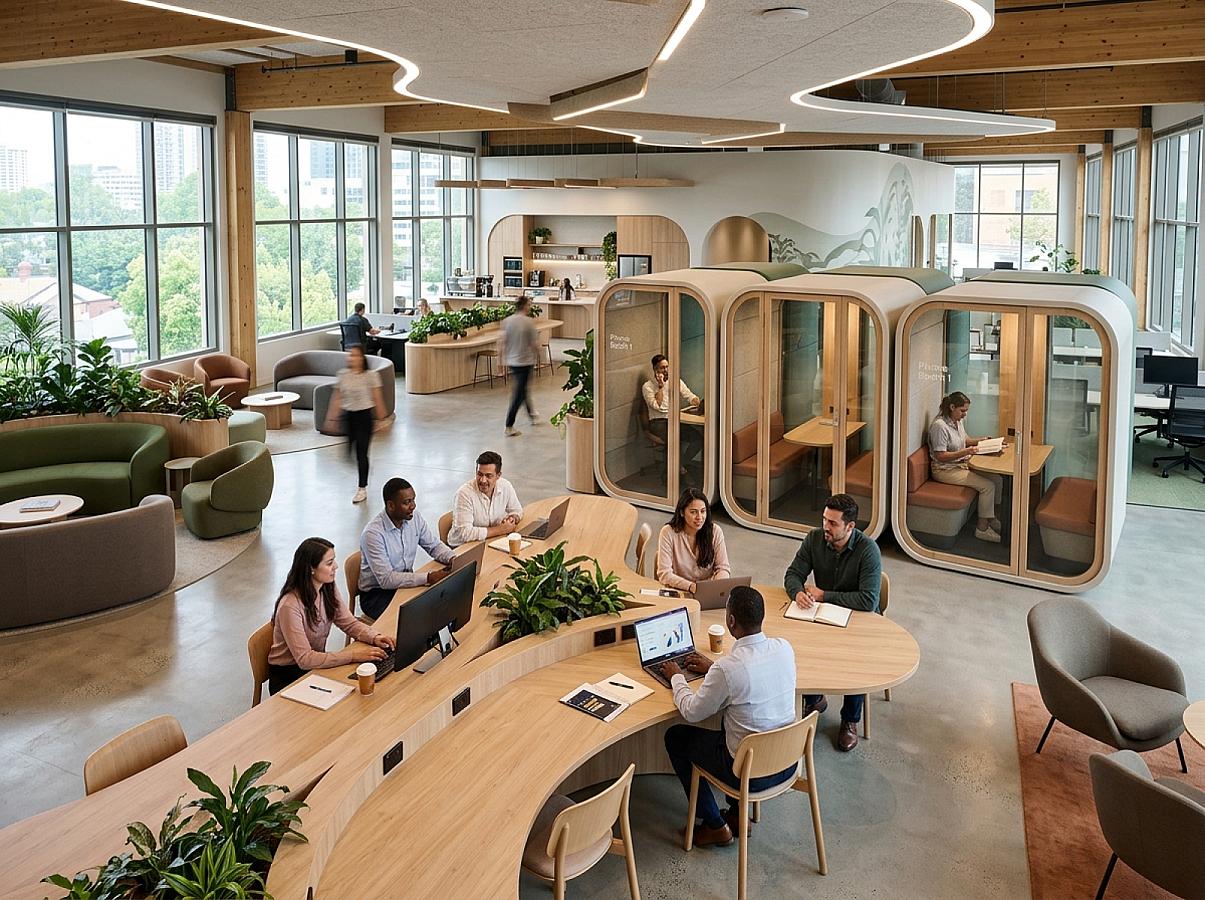
- Agile Desk Hot-Desking: Open desks that employees can book dynamically, featuring ergonomic sit-to-stand options to suit individual daily tasks.
- Soundproof Video Call Pods: Compact quiet booths equipped with acoustic panels and dedicated ventilation to host virtual calls without disrupting coworkers.
- Interactive Smart Boardrooms: Meeting rooms fitted with multi-angle smart cameras and central mic arrays, integrating remote participants seamlessly.
- Lounge Breakout Zones: Dedicated cafe corners and comfortable lounges built to foster casual, creative brainstorming.
Engineering the Wellness Factor: Lighting & Air Quality
Modern office interior architecture directly influences corporate productivity and mental health:
- Biophilic Elements & Daylight Access: Integrating plants and natural wood grains while mapping desk placement to maximize sunlight, which lowers workplace stress levels.
- Air Exchange & HEPA Ventilation: Installing responsive HVAC systems that introduce fresh outdoor air and eliminate stale air to prevent staff fatigue.
- Acoustic Noise Management: Utilizing wood wool ceilings, acoustic carpets, and upholstered dividers to absorb sound waves and limit distractions.
Embracing hybrid office design is a direct investment in your company's efficiency, workplace culture, and modern brand image.